

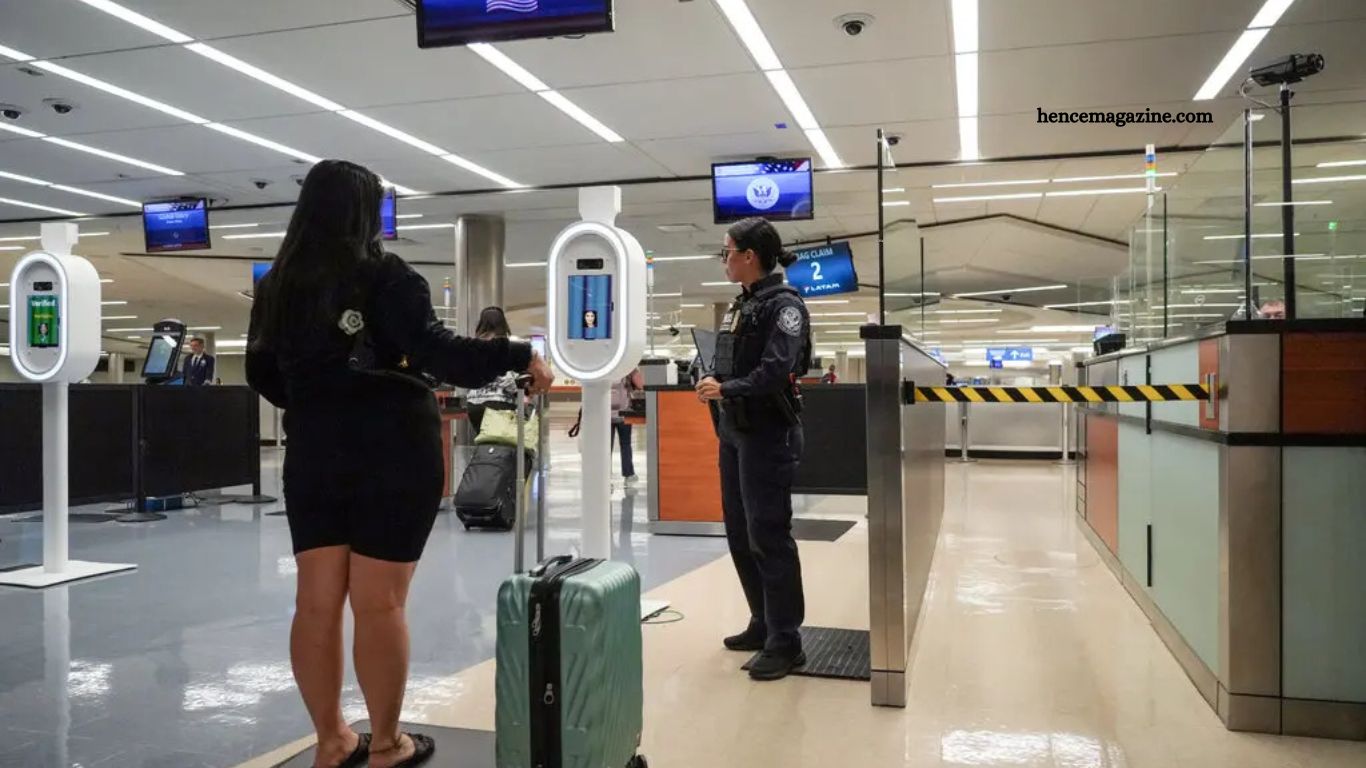
Flying abroad is about to get a high-tech upgrade. Imagine walking through an airport without having to fumble for your passport or boarding pass, while cameras unobtrusively verify your identity. This futuristic scenario is becoming a reality with the introduction of biometric “corridors,” where facial recognition technology streamlines international departures.
Orlando International Airport will be the first U.S. airport to pilot this innovation, allowing passengers to move through designated contactless zones while their identities are automatically confirmed against government records. Designed for speed, efficiency, and minimal disruption, the system aims to simplify travel for families, solo travelers, and those with special needs. At the same time, officials are carefully addressing privacy and data security concerns, marking a new era in airport technology.
Read More: New Love’s Travel Stop in Dora, Alabama: Boosting Travel and Tourism
A Glimpse Into the Future of Travel
Passengers departing from Orlando may encounter one of three 90-day pilot programs, including a “contactless corridor”—a discreet area equipped with multiple cameras capable of processing several travelers simultaneously.
“Our goal is that you don’t have to tell travelers to do anything specific at all,” said Joey Pritikin, Paravision’s chief product officer. “The idea is to make the technology disappear. We know exactly who is where, when.”
As travelers approach the gate, cameras capture their biometrics, which are instantly matched against government records to confirm identity and authorization to leave the United States. Gate agents then verify the information on a separate screen.
The Evolution of Biometric Verification
Biometric identity verification, mandatory for foreign visitors but optional for U.S. citizens, stems from a 2001 congressional mandate after the Sept. 11 attacks. While it has accelerated security and efficiency, privacy advocates have long raised concerns about data storage, usage, and accuracy.
Orlando International, Florida’s busiest airport, with 56 million passengers this year, has become a key testing ground for these technologies. Facial recognition can streamline the travel experience, especially for families visiting nearby attractions such as Disney World and the new Universal Epic Universe theme park.
“Technology enables us to move passengers more effectively without compromising safety and security,” said Lance Lyttle, CEO of the Greater Orlando Aviation Authority.
Biometric Entry and Exit: A Growing System
Biometric entry for international arrivals has been operational since 2004, but biometric exit for departing travelers has lagged due to logistical and cost challenges. Airlines and airports typically fund the necessary equipment.
Momentum is building. A new federal rule effective December 26, 2025, will expand biometric exit to all airports, seaports, and land crossings. Non-U.S. citizens will now be required to participate, while American citizens can opt out for a traditional inspection.
In the 2025 fiscal year, 52 percent of departing travelers were biometrically confirmed. Since June 2017, over 848 million people have undergone the process, helping identify more than 529,000 foreign nationals who overstayed visas.
Smoother Travel, but Privacy Concerns Persist
Biometric technology promises speed and convenience. “No getting your passport out, no getting your ticket out,” said Dominic Forrest, CTO of iProov. The U.S. Travel Association also supports the expansion, citing reduced bottlenecks and alignment with international standards.
However, privacy experts remain cautious. Jeramie Scott of the Electronic Privacy Information Center warned that facial recognition could shift identification control from individuals to the government, with limited regulation in place.
Officials stress that security, privacy, and trust remain priorities. “We want to take into consideration concerns and equities,” said Diane Sabatino, acting executive assistant commissioner for field operations at U.S. Customs and Border Protection. “A port of the future—five or ten years down the road—moves through at speed.”
Frequently Asked Questions
What is a biometric “corridor”?
A biometric corridor is a designated area at an airport equipped with cameras and sensors that can capture and verify travelers’ identities using facial recognition technology. It allows for a contactless, seamless boarding process.
Where is this technology being tested?
Orlando International Airport is the first U.S. airport to pilot the technology for select international departures. The program includes three 90-day pilot initiatives, including the contactless corridor.
Do travelers have to participate?
Participation is optional for U.S. citizens but required for foreign visitors. American travelers can choose to go through a traditional inspection instead.
How does the process work?
As passengers approach the gate, cameras capture their biometric data. This information is quickly matched against government records to confirm identity and travel authorization. Gate agents verify the results on a separate screen.
Is this technology safe and secure?
Airport authorities and U.S. Customs and Border Protection (CBP) emphasize security and privacy. Data is matched against government databases, but privacy experts caution that broader regulation of facial recognition technology is limited.
Will this speed up airport travel?
Yes. Facial recognition can streamline the boarding process, especially for families, travelers with children, and those requiring extra assistance. It reduces the need to present passports or boarding passes manually.
Conclusion
Biometric technology is steadily transforming air travel, offering passengers a faster, more seamless, and contactless experience. Orlando International Airport’s pilot programs provide a glimpse of the future, where boarding may no longer require fumbling for passports or tickets. While the technology promises efficiency and convenience, it also raises important questions about privacy, data security, and oversight.
